Anyone procuring a lift table for their business will sooner or later come across the EN 1570 series of standards, it defines the safety requirements for lift tables across Europe. While Part 1 covers the standard case, EN 1570-2 governs a special case of growing importance: lift tables that act as slow-moving goods lifts serving several levels of a building. We explain what lies behind it, and what you should look out for when purchasing.
The EN 1570 series at a glance
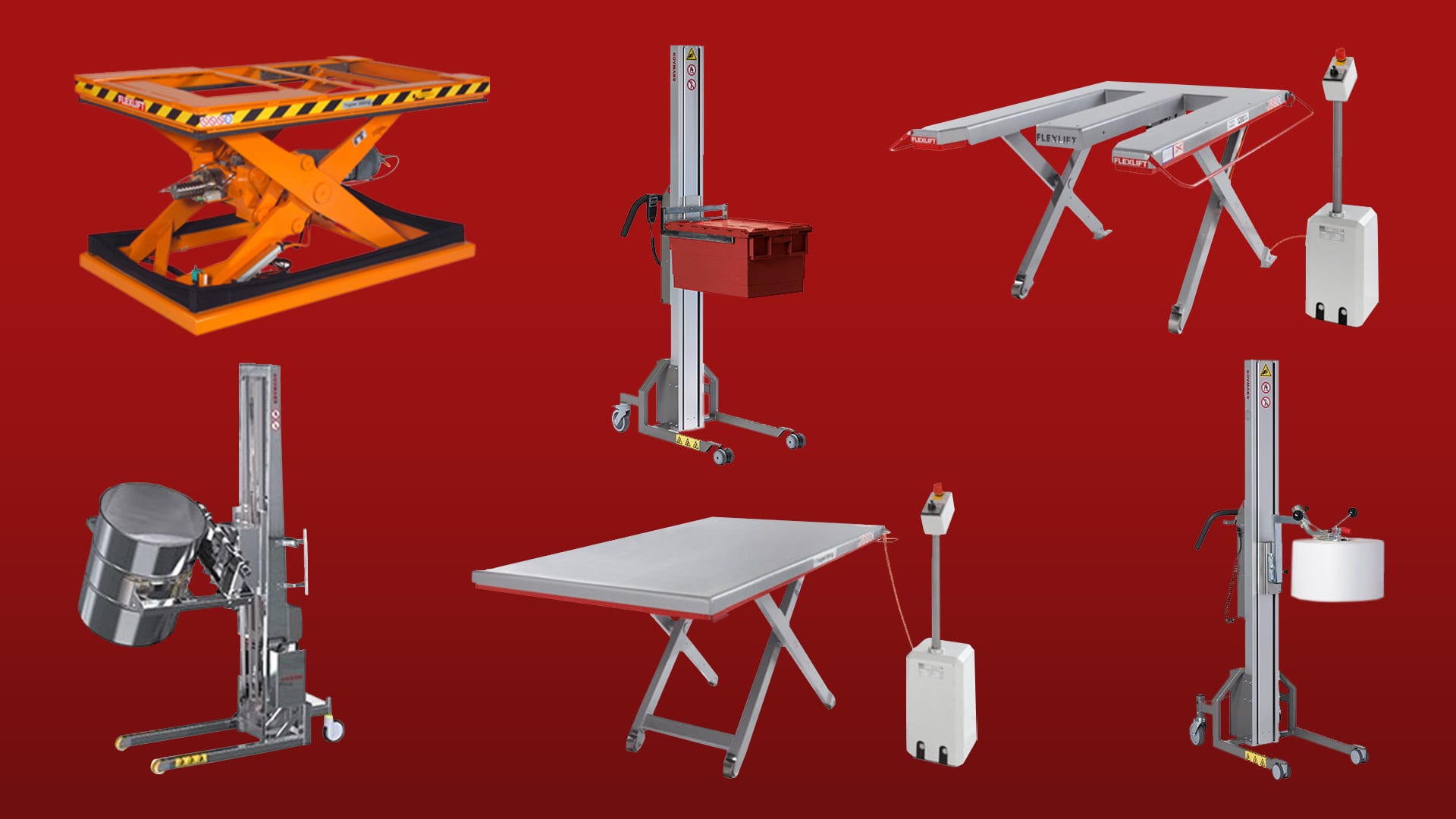
- EN 1570-1: applies to lift tables serving up to two fixed landings: the classic scissor lift table for raising, lowering and positioning. The standard was comprehensively restructured in 2024 and is currently being aligned with the new EU Machinery Regulation.
- EN 1570-2:2016: applies to lift tables for lifting goods that serve more than two landings of a building and whose lifting speed does not exceed 0.15 m/s (German edition: DIN EN 1570-2:2017-03). The standard is currently under revision; the final vote is scheduled for early 2026.
- EN 1570-3: a third part is under development: it will in future cover lift tables that lift operators serving more than two landings. Work has only just begun; publication is years away.
When does EN 1570-2 apply?
The standard applies when a lift table meets all of the following criteria:
- It serves two or more landings of a building or structure and travels past fixed landings in doing so.
- It is intended exclusively for goods, not for passenger transport.
- Persons step onto the platform only for loading and unloading.
- The lifting speed is no more than 0.15 m/s.
- The installation is permanently installed.
Typical applications are material transfers between the levels of a hall, for example, when pallets are lifted from goods-in to a mezzanine, or workpieces from the basement up to production.
Why exactly 0.15 m/s? The line to the Lifts Directive
The threshold is no accident: lifts with a travel speed above 0.15 m/s fall under the European Lifts Directive 2014/33/EU, with correspondingly extensive requirements for construction, inspection and operation. Slower installations are excluded from this directive and are instead treated as machinery under the Machinery Directive 2006/42/EC. This is precisely where EN 1570-2 comes in: it gives concrete form to the safety requirements of Annex I of the Machinery Directive for this class of equipment. Typical of such slow-moving installations is hold-to-run control: the travel movement runs only for as long as the operator keeps the switch actively pressed.
What does this mean for buyers in Switzerland?
In Switzerland too, lift tables are placed on the market as machinery bearing the CE marking and an EC declaration of conformity. For operation, the following also applies: under EKAS Directive 6512, power-driven lift tables and lifting platforms must be inspected at least once a year by a competent person, and the inspection must be documented. Before purchasing, it is therefore worth looking at four points:
- Count the landings: up to two fixed landings, an installation to EN 1570-1 is sufficient; with more than two landings, a design to EN 1570-2 is required.
- Clarify the use: are goods to be lifted exclusively, or do persons ride along? Passenger transport calls for a completely different category of installation.
- Check the declaration of conformity: it names the standards applied and must match the installation.
- Plan for periodic inspection: the annual inspection belongs in the maintenance concept from day one, ideally through a maintenance contract.
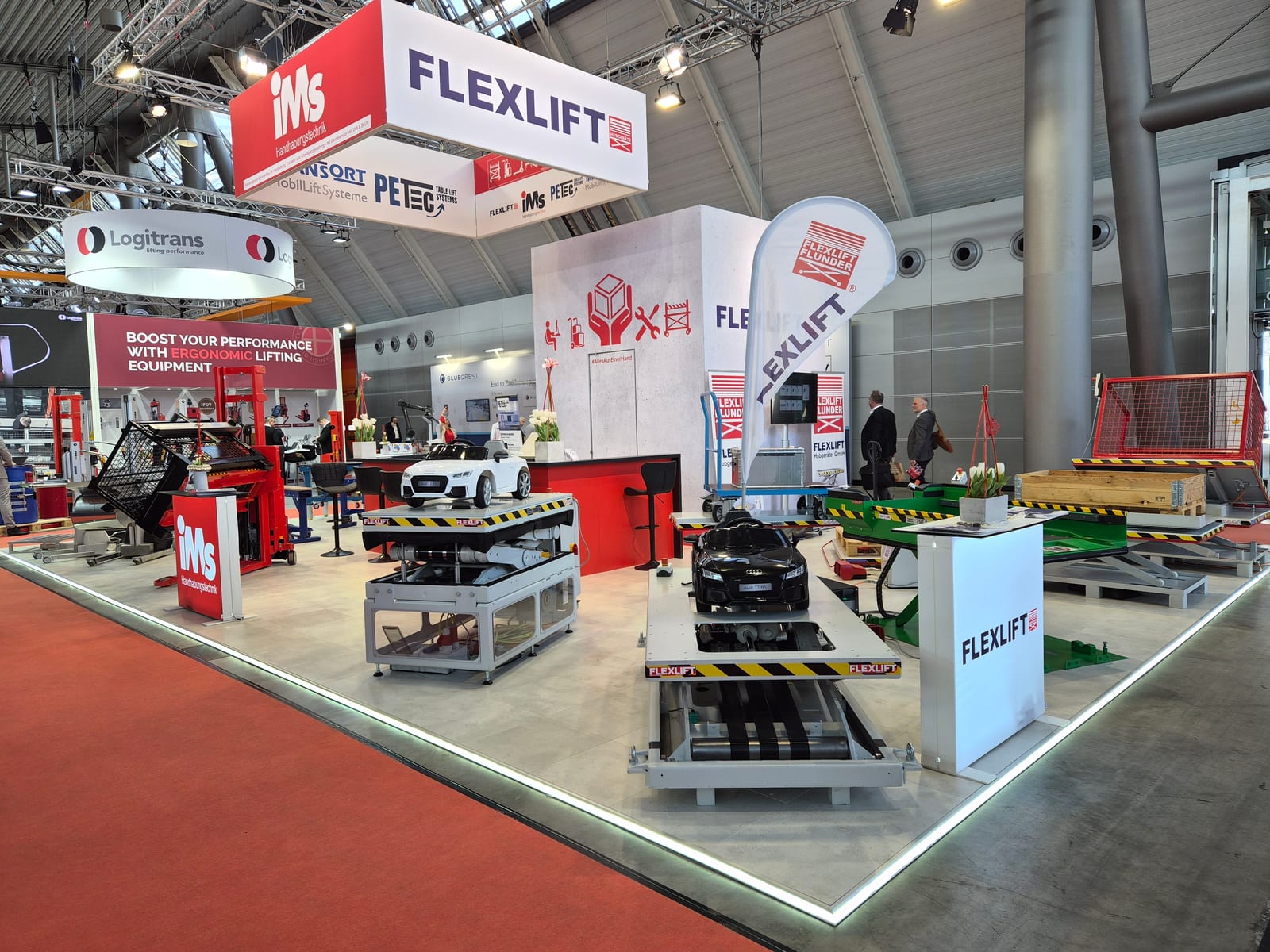
Tirugo's Flexlift lift tables are manufactured CE-compliant to the Machinery Directive and, as scissor lift tables, follow EN 1570. Whether a classic lift table with two landings or a multi-storey goods-lift installation: we advise you on a standard-compliant design, including annual SUVA-compliant inspection during operation. Arrange a consultation.