Lift table, lifting platform, scissor lift: in Switzerland these three names keep coming up in enquiries, and they usually describe the same machine, a scissor-type lifting device that moves a load vertically. This article clarifies what sits behind each term, when one or the other is used, and how to choose the right form without getting lost in the vocabulary.
The three terms at a glance
Let us start with the essentials. All three names cover the same basic principle, a load brought vertically to a working or process height by means of a scissor mechanism. The difference lies mainly in usage and register.
- Lift table: the more common technical term. It usually refers to the stationary scissor-mechanism platform that, as a stationary lifting platform, complies with the EN 1570 standard.
- Lifting platform: the broader, everyday term, used interchangeably with lift table and especially widespread in international contexts.
- Scissor lift: an everyday shorthand for the scissor lift table, that is the scissor-mechanism form of a lift table.
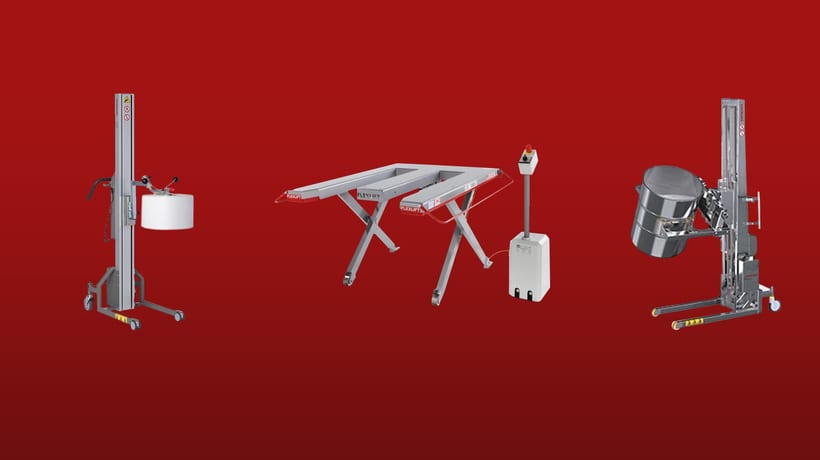
In other words, none of these names is wrong. In practice, Swiss customers refer to the same product by these different terms, and a range such as Flexlift covers all of these search variants. An overview of all designs and capacities is available on our lifting tables page.
Lift table: the common technical term
In Switzerland and Germany, lift table (Hubtisch in German) is the more common technical term, both in enquiries and on the shop floor. Technically it refers to a stationary scissor-mechanism platform, that is a device fixed to a workstation or integrated into a line, as opposed to a mobile machine. As a stationary lifting platform, the lift table complies with the EN 1570 series of standards, which defines the safety requirements for this type of equipment.
When a model is explicitly based on the scissor principle, it is described more precisely as a scissor lift table. This is the most common form and the one most users have in mind when they talk about a lift table.
Lifting platform: the broader term
The term lifting platform is used, in Switzerland, largely interchangeably with lift table. In everyday language and in international contexts it is especially widespread; the difference is one of register rather than technology. Where lift table points to the specific stationary device, lifting platform works as a broader, more generic term. In an enquiry, both words generally denote the same product.
It is worth avoiding a rigid, normative reading here: what is established is that the lift table denotes the stationary scissor platform that complies with EN 1570, while lifting platform serves as the more general term in everyday use. This flexibility of vocabulary is exactly why both names coexist without either being more correct than the other.
Scissor lift: the everyday shorthand
The third name, scissor lift, completes the picture. In everyday English, scissor lift is often used as shorthand for a scissor lift table, that is the scissor-mechanism form described above. It points to the same crossing-arm principle rather than to a separate technical category, and it renders the German Scherenhubtisch and the French table élévatrice à ciseaux.
For the user, the consequence is simple: whether you start from lift table, lifting platform or scissor lift, you arrive at the same family of products. Tirugo consistently presents its product and service pages under these terms, so that the different search variants lead to the same solutions.
The scissor principle explained
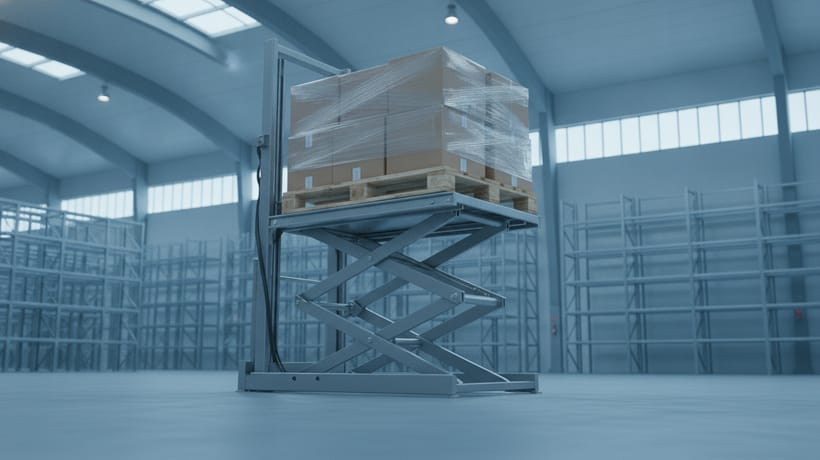
Since all three terms point to the scissor mechanism, it is worth describing it briefly. A scissor lift table raises and lowers a load vertically by means of two crossing steel arms arranged in a scissor formation. As the scissors spread apart the platform travels upwards, and as they close it moves downwards. This keeps the table stable and tilt-resistant, even under full load.
Depending on the design, the drive is hydraulic or via spindle, belt or push chain. The drive type determines the stroke, the precision and the environment in which the device can work; the differences between these principles are set out in our guide to lift elements and their drives. As a stationary lifting platform, such a table complies with EN 1570, and Tirugo's Flexlift lift tables cover load capacities up to 12,000 kg.
EN 1570 in the background
Whichever name is used, the stationary device falls under the same safety reference. As a stationary lifting platform, the scissor lift table complies with EN 1570, which frames the safety requirements for this type of equipment. The particular requirements that apply when an installation serves several fixed landings fall under part EN 1570-2, which we cover in detail in our article EN 1570-2 explained. Keeping this framework in mind is useful, because it is a reminder that the choice of word changes nothing about the technical requirements: it is the stationary design that defines the applicable standard, not the name used in the enquiry.
Which form for which use?
Once the vocabulary is clear, the real question is no longer the word, but the form suited to the application. The scissor principle comes in several designs, each tailored to a specific need. Here are the pointers to guide the choice.
- Compact lift tables: the robust, economical standard for assembly, packing and machine feeding, where a universal scissor lift table is enough.
- Low-profile lift tables: with a low closed height, for ground-level loading and pit installation, where pallets and trolleys need to be driven on without a ramp.
- Oil-free spindle lift tables: for precision and cleanliness, in cleanroom, pharmaceutical and food production, where the absence of hydraulic oil is decisive.
- Belt-drive lift tables: for large lifting heights and high cycle rates, in automation and transfer systems.
For warehouse and intralogistics use, the overview of lift tables for logistics shows ground-level configurations; for large strokes, heavy loads and high cadence, that of lift tables for automation and production is the right starting point. The needs of pharmaceutical and food production, where the absence of oil and regulatory compliance come first, are covered by the lift tables for pharma and food. Whichever term brought you here, it is the form that matters at the moment of the enquiry.
Frequently asked questions
What is the difference between a lift table and a lifting platform?
In practice, the terms lift table and lifting platform are often used interchangeably. Both refer to scissor-type lifting devices that move loads vertically. In Switzerland and Germany, lift table is the more common technical term, while lifting platform is widely used in everyday language and international contexts. Technically, the lift table denotes the stationary scissor-mechanism platform that, as a stationary lifting platform, complies with EN 1570.
Lift table, lifting platform or scissor lift: which is the right term?
All three names describe the same type of device, so none of them is wrong. Lift table is the more common technical term; lifting platform is the broader, everyday term; and scissor lift is an everyday shorthand for the scissor lift table. Tirugo presents its product and service pages under these terms and thus covers the different search variants.
What is a scissor lift table?
A scissor lift table is a lifting device that raises and lowers a load vertically by means of two crossing steel arms arranged in a scissor formation. As the scissors spread apart the platform travels upwards, and as they close it moves downwards, keeping the table stable and tilt-resistant even under full load. Depending on the design, the drive is hydraulic or via spindle, belt or push chain.
Which standard applies to stationary lift tables?
As a stationary lifting platform, the scissor lift table complies with EN 1570. Tirugo's Flexlift lift tables cover load capacities up to 12,000 kg. The requirements that apply when an installation serves several fixed landings fall under EN 1570-2.
A question of terminology should not hold up your project. Tell us what you need to lift, to what height and in what environment: we will identify the right form with you, whatever term you use. Send us your enquiry, or first take a look at our FAQ.